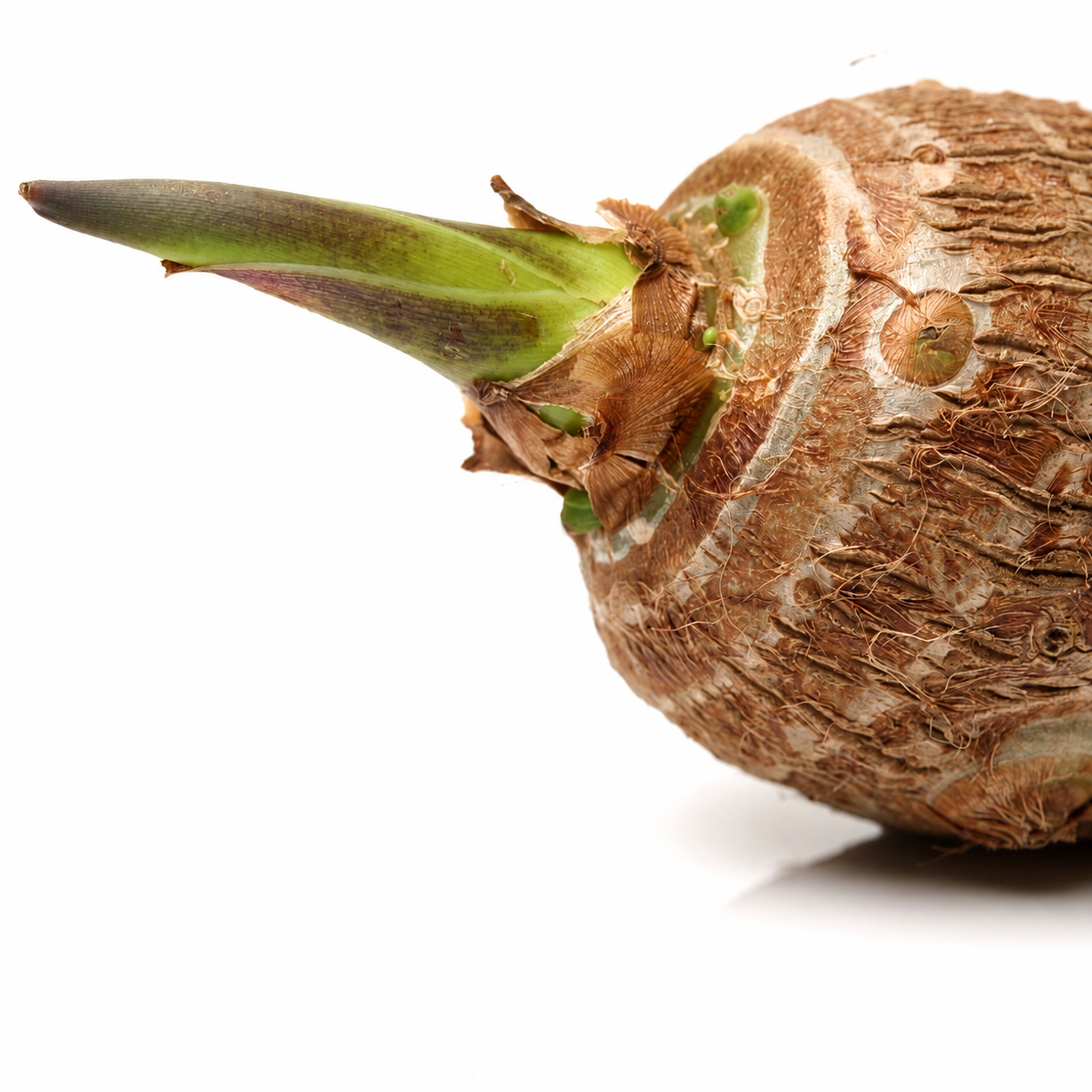
Colocasia Esculenta Seeds For Home Planting Also known as gabi, dasheen, cocoyam, kalo, poi and green elephant ear, this tropical plant develops heart-shaped leaves on stalks that reach 4 to 7 feet. The options cover sizes 3 to 25. The esculenta corms are packed for home growing, so you can start them in a bed, raised planter or container. Planting works with ordinary soil or standard potting mix, without special equipment, featuring everyday practical design. The esculenta seeds are packed for home growing, so you can start them in a bed, a raised planter, or a container. Sowing works with ordinary soil or a standard potting mix, without special equipment.
Plant the corm 4 to 6 inches deep with the blunt end down in warm soil. It typically sprouts in 1 to 3 weeks, prefers full sun to partial shade, and thrives in wet ground or at pond edges. The corm and young leaves are edible only when cooked, with harvest in fall after the foliage dies back. The planting depth, light, and moisture requirements are the main points to follow. The corm is ready for planting without extra preparation.
Product Details
- Available Quantity: 3, 10, 15, 25
- Material: Colocasia esculenta corm
Specifications
- Botanical Name: Colocasia esculenta
- Also Known As: gabi, dasheen, cocoyam, kalo, poi, green elephant ear
- Mature Height: 4 to 7 feet
- Sunlight: Full sun to partial shade
- Water: High. Thrives in wet ground and at pond edges
- Planting Depth: 4 to 6 inches, blunt end down
- Sprouting: Typically 1 to 3 weeks in warm soil
- Hardiness: Perennial in zone 8 and warmer. Lift and store in colder zones
- Climate: Tropical, subtropical
- Edible Parts: Corm and young leaves, cooked only, never raw
- Harvest: Fall, after the foliage dies back.
Features
- Creates a six-foot centerpiece with large, heart-shaped leaves.
- Produces leaves the size of a serving platter on stalks that reach 4 to 7 feet by late summer.
- Fills a shaded corner or screens a fence line.
- Offers a corm and young leaves for cooked food use.
- Connects ornamental planting with a food crop grown worldwide.
Style & Occasion
- Centerpiece: Use the tall foliage to create a dramatic focal point
- Shaded Corner: Fill a shaded area with substantial heart-shaped leaves
- Fence Screening: Plant along a fence line for a tall leafy display
- Patio Container: Anchor a patio pot with the bulb-form planting
- Wet-Ground: Place the plant where high-water conditions are available
- Edible Landscape: Grow a decorative plant that also provides a cooked corm and young leaves.
Care Instructions
- Provide full sun to partial shade.
- Keep the plant in high-water conditions, including wet ground or pond edges.
- Lift and store the corm in colder zones.
- Cook the corm and young leaves before eating.
Why Choose These Esculenta Seeds
Colocasia Esculenta Seeds For Home Planting are Colocasia esculenta corms for growing tropical foliage in home gardens, containers and raised planters. The corm and young leaves are edible when cooked, with sprouting typically occurring in 1 to 3 weeks in warm soil. The product details and care guidance above cover the practical points needed to decide. It features the everyday practical design as a defining part of the esculenta seeds.
Frequently Asked Questions
Everything you need to know before you choose
What sizes are available for Colocasia Esculenta Seeds For Home Planting? +
Colocasia Esculenta Seeds For Home Planting is available in sizes 3 to 25, with quantity options of 3, 10, 15, or 25. These options indicate how many corms are included rather than plant height. Once established, the plant can reach 4 to 7 and produces large, heart-shaped leaves. Choose the quantity based on how many planting locations, containers, or raised planters you want to fill.
What is Colocasia Esculenta Seeds For Home Planting made. +
Colocasia Esculenta Seeds For Home Planting contains Colocasia esculenta corms prepared for home growing. The corm is ready for planting without extra preparation and can be started in ordinary soil or standard potting mix. It works in a bed, raised planter, or container without special equipment. A standout feature is its potential to produce substantial tropical foliage, with stalks reaching 4 to 7.
How do I care for Colocasia Esculenta Seeds For Home Planting after planting? +
Plant the Colocasia esculenta corm 4 to 6 inches deep, with the blunt end down, in warm soil. It typically sprouts in 1 to 3 weeks and prefers full sun to partial shade with high moisture. Wet ground or a pond edge can suit it, while colder zones may require lifting and storing the corm. The corm and young leaves are edible only when cooked, never raw, and harvest is in fall after the foliage dies back.
What planting parts and features come with Colocasia Esculenta Seeds For Home Planting? +
The material is Colocasia esculenta corm, and the available quantity options are 3, 10, 15, and 25. A standout feature is its large, heart-shaped foliage, with stalks that can reach 4 to 7.
Where can I use Colocasia Esculenta Seeds For Home Planting, and who is it suitable. +
Colocasia Esculenta Seeds For Home Planting suits home growers who want tropical foliage in a bed, raised planter, patio container, or wet-ground area. It grows in ordinary soil or standard potting mix, so no special equipment is required. Choose full sun to partial shade and provide high moisture, including wet ground or a pond edge. The plant can fill a shaded corner, screen a fence line, or create a tall centerpiece. It is perennial in zone 8 and warmer; colder areas require lifting and storing the corm.
How dependable is Colocasia Esculenta Seeds For Home Planting over the growing season? +
Colocasia Esculenta Seeds For Home Planting typically sprouts in 1 to 3 weeks when planted in warm soil, but results depend on suitable warmth, light, and moisture. It requires high-water conditions and may not suit a dry planting area without consistent moisture. Mature stalks can reach 4 to 7, while large heart-shaped leaves provide substantial seasonal coverage. Harvest is in fall after the foliage dies back, and corms should be lifted and stored in colder zones.